Turkish Translation Services
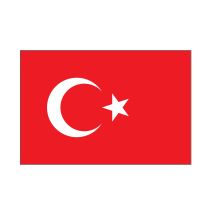
Orhan Pamuk, Turkey's Nobel Prize-winning novelist, built his fiction on register, voice and the weight a single word carries in Turkish. Turkish is agglutinative: each suffix changes the meaning of what came before. The wrong suffix does not produce awkward Turkish. It produces different Turkish.

Brightlines provides Turkish translation services to UK and international clients: consumer brands, technology companies, legal and immigration firms, manufacturers with Turkish supply chains, NGOs working in Turkey and UK public sector bodies serving Turkish-speaking communities. Work spans brand and marketing copy, legal and certified translation, software localisation, technical documentation and high-volume operational content, matched to the correct register, politeness level and sector expertise.
Turkish at a glance
- Script: Latin alphabet, introduced in 1928 as part of Atatürk’s alphabet reform. Spelling is phonetically consistent, but meaning sits in suffixes rather than separate words, and that is where most translation errors begin.
- Speakers: Turkish is spoken by approximately 80 million native speakers, primarily in Turkey (Türkiye), with significant communities across Europe including Germany, the Netherlands, Belgium and the UK.
- Agglutinative structure: Turkish stacks suffixes onto a root word, so one word can carry what English needs a full clause to say. Each suffix modifies the one before it, and suffix errors change tense, possession, obligation, negation or politeness without always looking wrong to a non-specialist reviewer.
- Word order: Turkish is a subject-object-verb language and the verb comes last. English structures transferred directly produce Turkish that is grammatically possible but tonally foreign. Natural Turkish needs restructuring, not word-for-word conversion.
- Politeness system: Turkish encodes politeness in grammar, through the choice between informal sen and formal siz, the two Turkish words for 'you'. The choice signals the relationship between writer and reader, so in customer-facing and brand content the wrong one reads as presumptuous or unnecessarily distant.
- Third-person pronoun: Turkish has a single third-person pronoun, o, covering he, she and it. Content built on gendered English pronouns needs the noun or role restated, and that has to be resolved consistently across a document before translation begins.
- Text expansion: Turkish text typically runs longer than its English source, particularly in formal and legal register. UI layouts, formatted documents and packaging must account for this expansion.
- Translation risk: suffix error in short strings is the most common Turkish translation failure. A button label, error message or legal clause with an incorrect suffix can change whether something is permitted, required or prohibited, with no surrounding context to recover the meaning.
When Turkish translation needs more than accuracy
A polite English request can land as an instruction
English carries politeness in word choice. Turkish carries it in grammar: pronoun, verb form and the shape of the request all signal the relationship between writer and reader. Translate a polite English request word for word and the Turkish can read as a flat instruction. In customer communication that is a credibility problem, and it surfaces in post-launch feedback rather than translation review.
Suffix errors in short strings escape generalist review
Longer prose gives a reader context to recover meaning from. UI strings, error messages, button labels and legal clauses give none: the suffix is the meaning. A single wrong suffix can shift who bears responsibility or when an obligation takes effect. These are the hardest errors to catch in review and the most costly to fix after publication, because every affected string has to be traced across the product or document.
Noun compounds and passives need restructuring, not translation
English stacks nouns freely. Turkish links them with possessive suffixes, so a stacked English compound has to be rebuilt, not carried across word by word. The Turkish passive is the voice of formal and official writing, so English passives carried straight across make consumer copy sound like an official notice. Without that restructuring the copy reads as distant and foreign.

AI suitability for Turkish translation
Small changes to Turkish suffixes can alter meaning, even when an AI translation appears fluent. A negative can become a positive, or a suggestion can turn into an obligation. These errors are easy to overlook without a close comparison with the source.
Tone needs equal attention. AI-generated Turkish can sound like an official notice, using stiff phrasing where a brand or customer message calls for a more natural, approachable voice. A Turkish translator checks meaning, suffix accuracy and politeness against the brief, ensuring the wording suits both the audience and the purpose before delivery.
How clients use our Turkish translation services
- Brand and marketing copy: consumer and B2B marketing copy, campaign content and brand communications for Turkish-speaking audiences in Turkey and across Europe. Turkish consumer culture responds to direct, confident phrasing at the correct politeness level, which makes this Creative Translation work. The sen or siz decision is confirmed before translation begins and applied consistently throughout the campaign.
- Legal, certified and immigration translation: contracts, certified translations of identity documents, educational qualifications, criminal records and legal correspondence for Turkish-speaking individuals and organisations in the UK. Turkish legal register is distinct from standard written Turkish in vocabulary, obligation framing and suffix conventions, and immigration and legal proceedings demand approvals-ready formatting, so Specialist Led Translation applies.
- Technology and software localisation: UI strings, help documentation, onboarding flows, in-app copy and error messages for products entering the Turkish market. Short UI strings are where Turkish suffix errors are most visible and most damaging, so Specialist Led Translation keeps terminology suffix-accurate across every string. Turkey is a major and growing digital market with a sophisticated consumer audience.
- Technical and manufacturing documentation: product specifications, operational procedures, equipment manuals, safety data sheets and supplier communications for UK businesses with manufacturing or supply chain relationships in Turkey, particularly in automotive, textiles and food production. Technical Turkish carries precise terminology that varies by sector, and errors in safety or compliance documentation carry real operational risk: Specialist Led Translation throughout.
- Operational and internal content at volume: HR documentation, training materials, FAQs, policy updates and employee communications for organisations with Turkish-speaking workforces or operations. Smart Translation absorbs the volume, with human review checking suffix accuracy, politeness register and terminology before delivery.
What you get with Brightlines
Turkish translators matched to sector
For you: translators matched to the content type, not the language pair alone.
Turkish legal and certified work goes to translators who know Turkish obligation language and the formal register certified documentation requires. Brand and consumer marketing goes to translators who know how Turkish-speaking audiences respond to politeness levels and vocabulary. Technical content goes to translators familiar with Turkish industrial terminology, and sector experience decides the match in every case.
Human-led review of Turkish suffix accuracy
For you: suffix accuracy, agreement and terminology confirmed before delivery.
Every Turkish job passes through human review that checks suffix accuracy, agreement across the suffix chain, vocabulary consistency and terminology against the brief. Case, possession, tense, person and modality can all attach to a single Turkish word, so an error early in the chain propagates through everything after it.
Politeness register calibrated for Turkish audiences
For you: politeness level confirmed for Turkey and diaspora audiences, not grammatical correctness alone.
The sen or siz decision is one of the most consequential register choices in Turkish, and it shifts with sector, brand positioning and audience. Brand and marketing content is translated with knowledge of how readers in Turkey and the European diaspora respond to register, then reviewed for politeness level, consistent use of sen or siz and natural Turkish phrasing.
Get a quote for Turkish translation services in the UK
Turkish translation at Brightlines covers brand and marketing copy, legal and certified translation, software localisation, technical documentation and operational content at volume. Every project is matched to the right register and politeness level for its audience. Talk to us about your project.


Sound local in every language.
If your content has to sell, persuade, reassure, or build trust, the choices between the words matter. We keep a human in control on every project, then use supportive tools only where they genuinely help. The result is writing that reads cleanly, stays consistent, and sounds like you, not a template.

Industry Experience

International Reach

Speed & Accuracy
Supported
Languages
We support a wide range of languages, from major global markets to specialist regional languages.